
Residential Floating Dock for Florida Homes
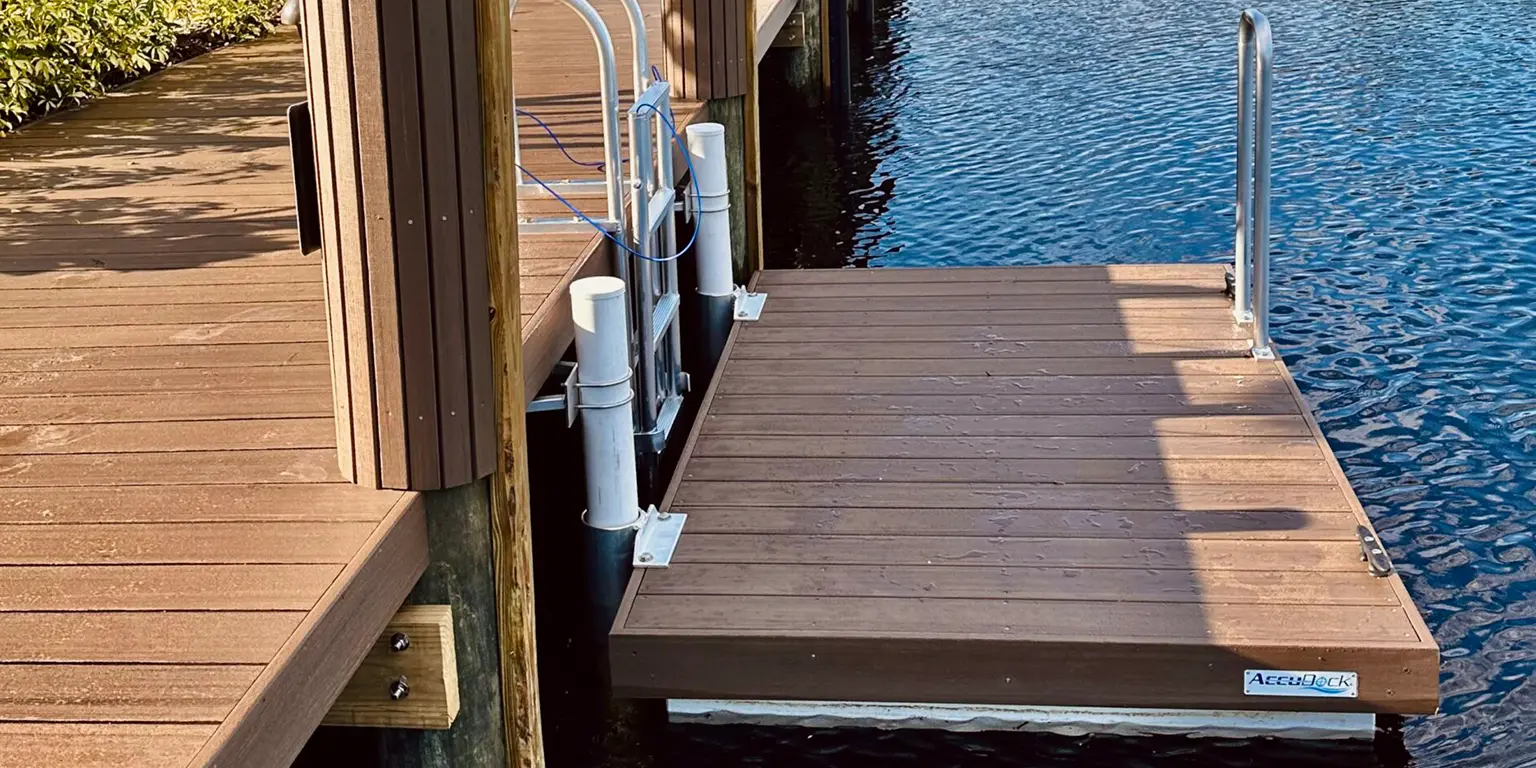
There’s something special about living on the water in Florida. Whether your weekends are spent taking the boat out at sunrise, casting a line with family, launching kayaks, or simply relaxing by the shoreline, your dock quickly becomes one of the most-used parts of your property. It isn’t just a place to tie up a boat—it’s where memories are made and where you experience your waterfront lifestyle every day. Choosing the right Residential Floating Dock means investing in a solution that keeps pace with changing water conditions while providing dependable access, comfort, and long-term value. At The Dock Experts, we design and install custom floating dock systems that are built around your shoreline, your needs, and the way you enjoy life on the water.
Why More Florida Homeowners Are Choosing Floating Docks
One of the biggest challenges of owning waterfront property in Florida is that the water itself is constantly changing. Seasonal rainfall can dramatically raise lake levels, while extended dry periods may expose more shoreline than homeowners expected. In canals and protected waterways, changing tides, boat traffic, and weather patterns can also influence water levels throughout the year. A dock that works perfectly during one season may become less convenient during another if it isn’t designed to adapt.
That’s one reason more homeowners are choosing floating dock systems over traditional fixed docks. Instead of remaining at one fixed elevation, a floating dock rises and falls naturally with changing water levels. This allows the walking surface to remain at a consistent height above the water, making it easier to board a boat, launch a kayak, or simply enjoy your dock without constantly adjusting to changing conditions. The experience feels more consistent throughout the year, even as the water beneath it changes.
This flexibility is particularly valuable for homeowners who use their waterfront frequently. Imagine stepping onto your dock after weeks of heavy summer rain or during a particularly dry season and finding that accessing your boat feels just as comfortable as it did months earlier. Rather than planning around fluctuating water levels, you can spend more time enjoying your property and less time worrying about whether your dock is still functioning the way you need it to.
Of course, a floating dock isn’t automatically the right choice simply because your property sits on the water. The shoreline, water depth, recreational activities, and long-term goals for the property all influence which type of dock will perform best. That’s why every project we take on begins with understanding the property itself rather than recommending a standard solution. When a dock is selected for the specific conditions of your waterfront, it delivers a better experience from the day it’s installed.
Think About How You’ll Use Your Dock Before Choosing One
Many homeowners begin shopping for a dock by comparing materials or prices, but one of the most important questions comes much earlier in the process: How do you plan to use it? The answer often shapes every design decision that follows. A dock designed primarily for boating may look very different from one built for entertaining, fishing, or relaxing with family. Understanding how you envision using your waterfront helps create a dock that supports your lifestyle instead of limiting it.
For some homeowners, the dock serves as a practical extension of the marina. It needs to provide easy access for boarding the boat, securing watercraft, and loading coolers or fishing equipment before heading out for the day. Others picture children swimming from the dock during the summer, launching paddleboards on quiet mornings, or spending evenings watching the sunset with friends. Each activity places different demands on the dock’s layout, available space, and overall functionality, which is why thoughtful planning is so important before construction ever begins.
It’s also worth thinking about how your needs may change over time. Perhaps you currently own a small fishing boat but hope to upgrade in the future. Maybe your dock will eventually become the centerpiece for family gatherings, or you’d like the flexibility to add features as your waterfront lifestyle evolves. Designing with those possibilities in mind can help create a dock that continues to serve your property well for years rather than becoming something you quickly outgrow.
At The Dock Experts, we begin every project by listening before we start designing. We want to understand how you use your waterfront today, what challenges you’re experiencing with your current dock, and what you’d like your finished project to accomplish. Those conversations allow us to recommend solutions that fit naturally into your daily life instead of asking you to adapt to a generic dock design.
Why Custom Design Matters More Than Most Homeowners Realize
It’s easy to assume that waterfront properties share many of the same characteristics, but in reality, no two shorelines are exactly alike. Two homes on the same lake may have completely different water depths just a few feet from shore. One canal may experience frequent boat wake while another remains calm throughout the day. Even neighboring properties can require very different dock designs depending on shoreline slope, bottom conditions, available space, and intended use. Those differences have a direct impact on how a dock performs over time.
That’s why we don’t believe in prefabricated dock packages or one-size-fits-all layouts. A homeowner who primarily launches kayaks has different priorities than someone docking a pontoon boat every weekend. A family looking for an outdoor gathering space may benefit from a wider platform, while another homeowner may need to maximize access within a narrower canal. Taking these factors into account during the design process allows us to create a dock that feels intentional rather than simply functional.
Custom design also helps homeowners get the most value from their investment. Instead of paying for features they don’t need or compromising because a standard dock doesn’t fit the property, every element is planned around the shoreline itself. The size, configuration, access points, decking materials, and structural components are all selected with the property’s unique conditions in mind. The result is a dock that not only performs well but also complements the home and surrounding waterfront.
Our role is to guide homeowners through those decisions using experience gained from designing and installing docks across Florida’s diverse waterways. We evaluate the shoreline, discuss your goals, and develop a solution that balances performance, durability, and everyday usability. By approaching every project individually, we’re able to create custom floating dock systems that are built for the way you actually live—not just the way a standard dock kit was designed to fit.
What Makes a Floating Dock Feel Stable?
When homeowners picture a floating dock, one of the first questions they often ask is whether it will feel secure underfoot. That’s a reasonable concern because a dock should inspire confidence every time you step onto it, whether you’re carrying fishing gear, helping children aboard a boat, or unloading coolers after a day on the water. Stability isn’t just about comfort—it plays an important role in making your waterfront easier and more enjoyable to use. The right floating dock should feel like a natural extension of your shoreline rather than a platform that’s constantly shifting beneath you.
That level of confidence starts below the surface. Our floating dock systems utilize foam-filled polyethylene floats that are engineered to provide consistent buoyancy while standing up to Florida’s demanding waterfront conditions. Unlike hollow floats that can lose performance if damaged, foam-filled designs continue providing dependable support even in challenging environments. They’re also built to resist punctures and prolonged UV exposure, helping maintain long-term performance despite years of sun, water, and everyday use.
Good flotation isn’t simply about keeping the dock above the water—it’s about creating a stable experience in changing conditions. As water levels rise and fall throughout the year, the dock adjusts naturally while maintaining a comfortable walking surface. Whether you’re stepping aboard a boat early in the morning or gathering with friends for an evening by the water, that consistent stability allows you to focus on enjoying your property instead of worrying about the dock beneath your feet. It’s one of those features homeowners appreciate every time they use their waterfront, even if they rarely think about the engineering that makes it possible.
Of course, flotation is only one piece of the equation. A floating dock performs best when every structural component is designed to work together, creating a system that balances strength, durability, and dependable performance. That’s why we look beyond individual products and engineer each dock as a complete solution tailored to the property it will serve.
Materials Matter More Than You Think
When comparing dock systems, it’s easy to focus on appearance while overlooking what’s supporting the entire structure. Yet the materials used beneath the decking often have the greatest influence on how well a dock performs over the years. Florida’s waterfront environment is demanding, exposing docks to constant moisture, intense sunlight, fluctuating temperatures, and, in many locations, salt air. Choosing materials designed specifically for those conditions helps protect your investment long after installation is complete.
At The Dock Experts, every TDX Floating Dock System is built around a heavy-duty marine-grade aluminum truss frame. We choose marine-grade aluminum because it delivers an outstanding balance of structural strength, corrosion resistance, and lightweight performance. Unlike heavier materials that may place additional stress on the flotation system, aluminum provides exceptional durability without unnecessary weight. Its natural resistance to corrosion also makes it an excellent choice for Florida’s waterfronts, where moisture exposure is simply part of everyday life.
Using quality materials isn’t just about extending the lifespan of a dock—it’s also about reducing the amount of maintenance required to keep it performing its best. Homeowners generally want to spend weekends enjoying the water, not repairing or replacing structural components. By selecting marine-grade materials engineered for demanding environments, we help minimize long-term upkeep while providing the reliability homeowners expect from a permanent waterfront investment.
Professional engineering is equally important. Rather than assembling prefabricated dock kits, we fabricate and install complete dock systems designed around real-world conditions. Every structural component is selected to work together as part of a cohesive design, giving homeowners confidence that their dock has been built to deliver dependable performance for years to come.
Choosing the Right Decking Isn’t Just About Appearance
Once the structure of the dock has been designed, the decking becomes the surface you’ll interact with every time you step outside. While many homeowners initially focus on color or appearance, the right decking material should also reflect how you plan to use your dock. Comfort, maintenance requirements, durability, and traction all play an important role in selecting the best option for your waterfront lifestyle. Choosing the right surface can make everyday use more enjoyable while helping your dock continue looking its best over time.
For homeowners looking for the lowest-maintenance solution, PVC decking is an excellent choice. Its durable surface resists splintering, provides dependable slip resistance, and requires very little ongoing upkeep compared to traditional wood products. This makes it especially appealing for families who spend a great deal of time barefoot on the dock or simply want to enjoy their waterfront without adding another maintenance project to the calendar. The clean appearance and practical performance make PVC a popular option across many residential properties.
Some homeowners place long-term durability at the top of their priority list. For those applications, aluminum decking offers exceptional strength while helping dissipate heat more effectively than many traditional materials in Florida’s sunny climate. It’s well suited for homeowners who value longevity and dependable performance while maintaining a clean, modern appearance. Its low-maintenance characteristics also make it an attractive choice for waterfront properties that see frequent use throughout the year.
Others are drawn to the timeless beauty of natural wood. Western Red Cedar remains a favorite among homeowners who appreciate its rich character and classic waterfront aesthetic. It creates a warm, inviting appearance that complements many residential properties while offering a distinctive look that only natural wood can provide. Rather than recommending one material for every project, we help homeowners weigh the advantages of each option so their finished dock reflects both their practical needs and their personal style.
Is a Residential Floating Dock Right for Your Waterfront?
While floating docks offer outstanding versatility, the best choice always depends on your property’s unique conditions and how you use your waterfront. Instead of asking whether floating docks are generally better than fixed docks, it’s often more helpful to ask a few practical questions about your own shoreline. Do water levels around your property change noticeably throughout the year? Have you found it difficult to board your boat during especially high or low water? Are you replacing an aging dock that no longer fits the way you use your waterfront today? The answers to these questions often point toward the solution that will provide the greatest long-term value.
A Residential Floating Dock is particularly appealing for homeowners who want dependable access regardless of seasonal water fluctuations. It can also be an excellent choice for families who use their dock for a variety of activities beyond boating alone. Whether you’re launching kayaks, spending afternoons fishing, entertaining guests, or creating a comfortable place to relax by the water, a floating dock adapts naturally to the changing conditions that are part of life on Florida’s waterways. That flexibility allows your dock to support your lifestyle rather than requiring your lifestyle to adapt to the dock.
The best way to determine whether a floating dock is right for your property is through a professional evaluation. During that process, we consider your shoreline conditions, recreational goals, and long-term plans before recommending a solution. Our objective isn’t to fit every property with the same design—it’s to help homeowners invest in a dock system that enhances the way they experience their waterfront for years to come.