
Pilings
Dock Experts specializes in the installation, repair, and replacement of high-quality pilings designed to provide unmatched stability and durability for your dock. We use materials like concrete, steel, and treated wood to withstand the harsh marine environment of South Florida. Our expert team ensures that your pilings are built to last, offering a strong foundation for your waterfront structure, whether for residential or commercial projects.
Noticing Signs of Damage Around Your Dock Pilings?
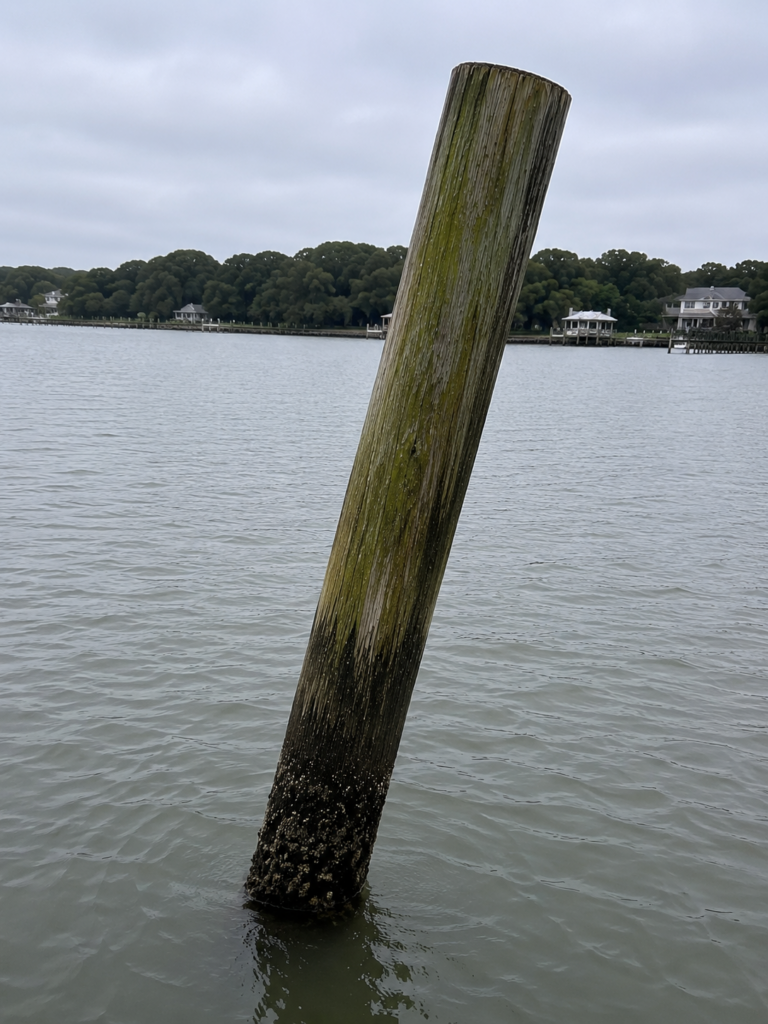
Leaning or Shifting in Pilings
Leaning or shifting piles signal foundational instability, often caused by soil erosion, tidal forces, or inadequate depth. This misalignment weakens the overall structure, putting the seawall at risk of failure. Reinforcing or re-driving piles can restore alignment and stability, ensuring the seawall’s strength against environmental pressures.
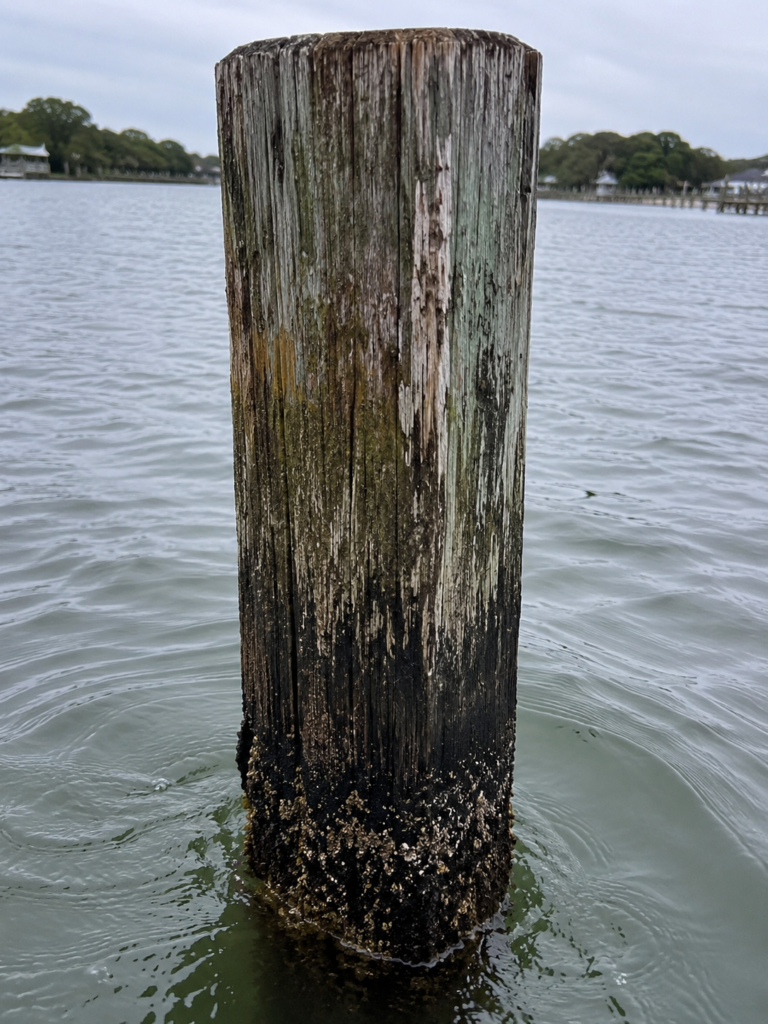
Discoloration on pilings
Discoloration on pilings often signals material degradation from exposure to water, algae, and marine organisms. Over time, this can lead to surface weakening and greater vulnerability to decay. Regular maintenance, such as cleaning and applying protective coatings, helps prevent further discoloration and extends the piling’s structural integrity.
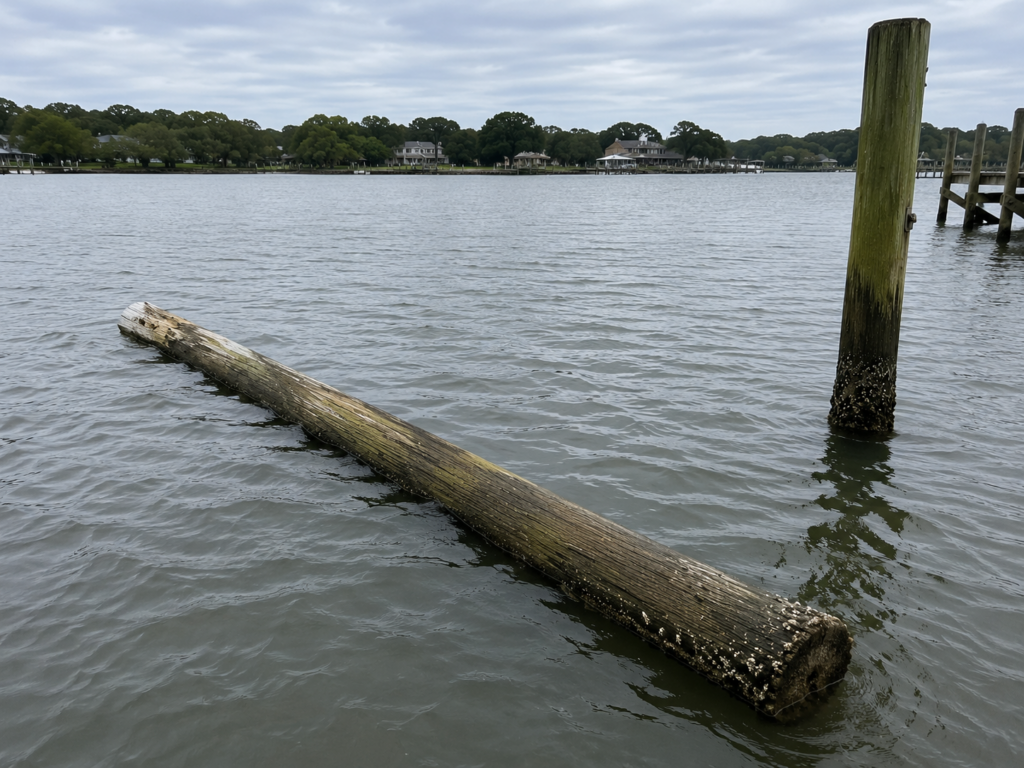
Fallen / Failed pilings
A fallen or failed dock piling is a serious structural issue that can compromise the stability of the entire dock. Erosion, rot, unstable soil, and impact damage are common causes of piling deterioration over time. As the damage progresses, pilings may shift, collapse, or lose the strength needed to properly support the structure.
Why Dock Pilings Become Damaged Over Time
Wood Rot & Decay
Wood pilings are prone to rot and decay from constant moisture exposure, weakening the structure over time. Treating pilings with water-resistant sealants or replacing them with rot-resistant materials like treated wood or composite ensures durability and longevity, preserving the stability of the dock or seawall.
Inadequate Hardware
Using inadequate or corroded hardware on pilings compromises the structure’s integrity, as loose or weakened connections can lead to instability. Replacing with marine-grade stainless steel or galvanized hardware ensures durability against saltwater and weather, maintaining secure piling connections and enhancing the entire structure’s resilience.
Settling or Shifting Soils
Settling or shifting soils can cause pilings to lean or lose stability, often due to erosion or inadequate pile depth. Re-driving or reinforcing the pilings and stabilizing surrounding soils are essential to restore alignment and prevent further movement, ensuring strong foundational support.
Damage From Boats or Weather
Boats or extreme weather can damage pilings through impact or abrasion, weakening their structural integrity. Installing protective wraps or jackets, or reinforcing damaged sections, helps prevent further wear. Routine inspections and timely repairs mitigate damage and extend the pilings’ effectiveness in harsh marine environments.
These are just a few of the causes of damage associated with owning and maintaining pilings. We are THE Dock Experts and can help with all piling related issues.
How The Dock Experts Restore Damaged Dock Pilings
Replace Pilings
Replace failing or damaged piles with more durable options such as concrete, steel, composites, or treated/encapsulated wood piles, which offer better resistance in marine environments and a longer life span.
Marine-Grade Parts
Utilize marine-grade stainless steel hardware and cable wraps, designed for the demanding conditions of marine environments. Ensure installation is completed by a professional marine contractor.
Professional Equipment
Fixing piles requires an engineered solution installed with proper pile driving equipment and techniques by professional marine contractors. This ensures long-term stability, preventing settling or shifting, and guarantees the dock’s durability in harsh marine environments.
The Dock Experts Piling Solutions
Marine Piling Repair
When piles show early signs of wear, cracking, or marine borer damage, targeted marine piling repair can extend their lifespan. Our piling services focus on stabilizing existing piles while maintaining structural integrity in demanding waterfront environments.
Concrete Piling Installation
Concrete pilings offer exceptional durability and resistance to rot, corrosion, and marine organisms. Our piling services include professional concrete piling installation for docks that require long-term strength and minimal maintenance.
Steel Dock Pilings
Steel dock pilings provide high load capacity and superior performance in high-energy marine environments. We install and secure steel pilings using proper driving techniques to ensure stability and long-term dock support.
Treated Wood Pilings
Treated wood pilings combine traditional materials with modern protection systems. This piling service involves sealing existing or new wood piles to prevent water intrusion, rot, and marine growth, significantly extending service life.
Marine-Grade Hardware
Proper piling services go beyond the pile itself. We use marine-grade stainless steel hardware and cable wraps designed to resist corrosion and maintain strength in saltwater and freshwater environments.
Pile Driving Services
Professional pile driving is essential for dock stability. Our piling services utilize specialized marine equipment and proven installation techniques to achieve proper depth, alignment, and load transfer for long-term performance.
Dock Stabilizer Services
Failing pilings often lead to uneven docks and unsafe conditions. Our piling services stabilize dock foundations by correcting settlement issues and reinforcing structural support to prevent shifting over time.
Piling Reinforcement Services
When replacement isn’t required, piling reinforcement services can restore strength to compromised piles. This approach enhances structural integrity while minimizing disruption to existing dock systems.
Book A
Free Inspection
FAQ
Have Questions About Piling?
That depends on how advanced the damage is and whether the piling can still provide reliable structural support. Minor surface wear, early cracking, or localized damage may sometimes be addressed with repair or reinforcement, while severe leaning, major rot, collapse, or loss of load-bearing capacity often points to replacement. The key is determining whether the piling is still structurally dependable in marine conditions. The Dock Experts can inspect your pilings and determine whether repair is a practical long-term solution or whether replacement is the better option.
Yes. Marine growth and organisms can contribute to piling deterioration over time, especially when they trap moisture, hide surface damage, or directly attack certain materials. On wood piles in particular, marine borers and prolonged biological exposure can accelerate structural decline. Even when the damage starts below the surface, it can eventually affect the piling’s strength and stability. Monitoring piling condition regularly is important in active marine environments.
The visible dock surface is only part of the structure. If the pilings below are shifting, weakening, settling, or losing alignment, the dock may feel loose or uneven even when the deck boards still appear to be in decent condition. In many cases, instability starts in the support system long before obvious surface failure appears above, and visible wear alone does not always show whether a piling is still structurally sound. The Dock Experts inspects the condition of the pilings, their alignment, and how they are affecting the stability of the dock as a whole to determine whether repair, reinforcement, or replacement is the right solution.
Minor movement can happen over time, but noticeable shifting, leaning, or changes in dock stability should not be treated as normal settling without being checked. In a marine environment, repeated exposure to tides, wave action, soil movement, and weather can gradually affect piling performance. What seems like a small change may be an early sign of a larger support issue. The Dock Experts can evaluate whether the movement is minor or a sign that repairs are needed.
In many cases, yes. If the support system is compromised, surface-level dock repairs may not hold up the way they should. Boards, framing, and hardware all depend on stable pilings underneath. The Dock Experts can inspect the foundation first so any additional dock work is built on a structurally sound base.
Yes. If a dock is showing signs of movement, unevenness, or structural wear, The Dock Experts can evaluate the pilings as part of a broader look at the support system. That helps determine whether the issue is isolated to the surface structure or tied to the foundation below. A full evaluation gives property owners a clearer picture of what repairs are actually needed.